
Supporting Deaf People at Church
As I grew from infancy to adolescence, my hearing declined. I had several medical issues that kept affecting my ears until I lost all hearing in my left ear and half my hearing in my right. At school, I was always sitting in the front row to the left of the classroom, and in social situations I was always making sure people were on my right-hand side. I got my first hearing aid when I was 10 years old, which helped me a lot! I never thought I would be so excited to hear the click clack of high heels!
For the most part, life went on as normal. But at times I did miss out. There were the quick jokes muttered in passing, no water sports and messy games, or even fatigue at the effort of listening and being constantly aware of my surroundings.
I wouldn’t change my experience. I believe God has equipped me and is using me in his service as I am. That’s why I’m keen to share some ideas to help your church accommodate people who are Deaf[1] or hard of hearing in your gatherings and ministries.
Why accessibility matters for our Deaf community
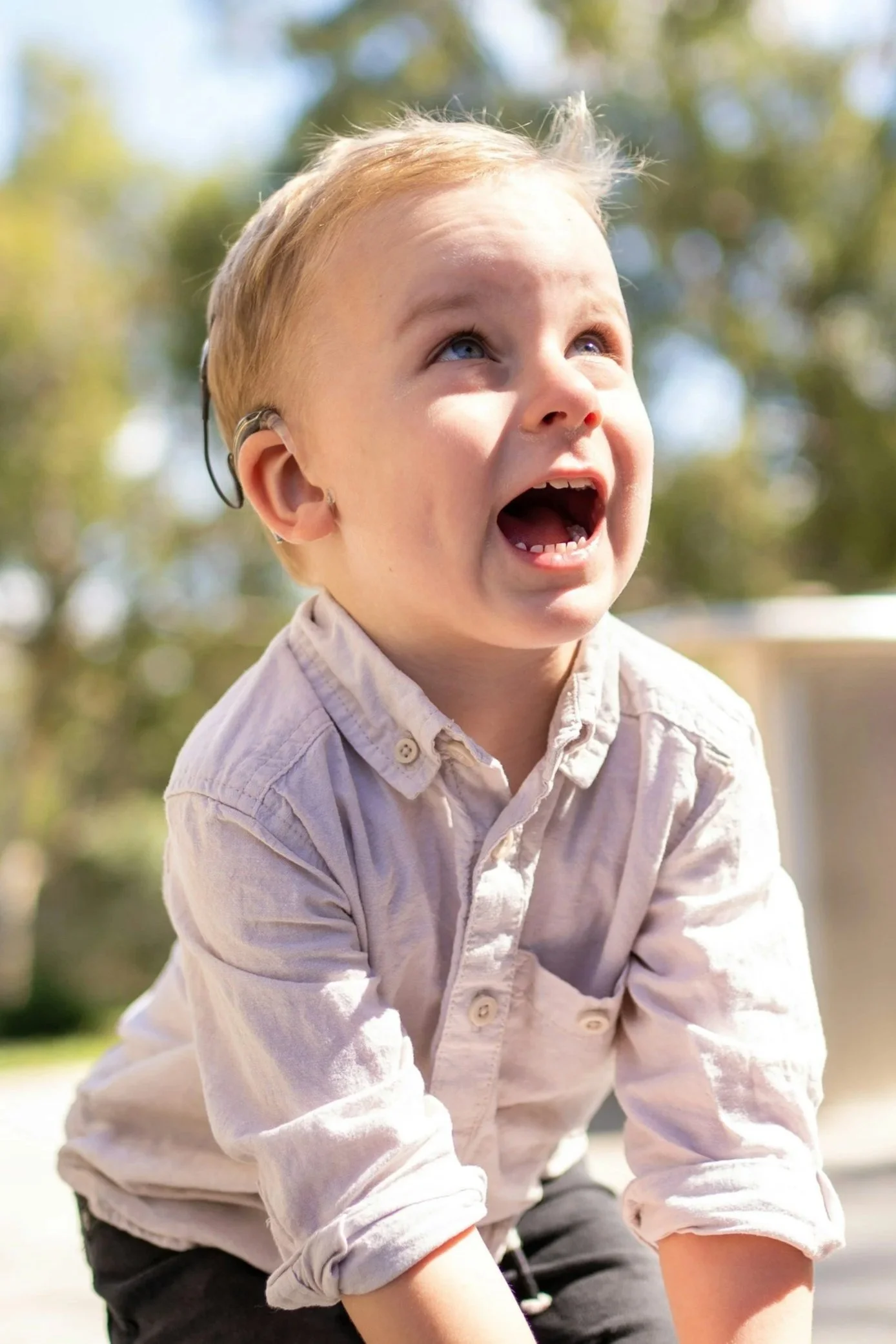
There are currently about 1 in 6 people who experience hearing loss in Australia with numbers due to increase. Hearing loss can be caused by genetics, medical issues or accidents, aging, or over exposure to loud noise[2]. There are more people who experience hearing loss than we (or they!) may realise. It’s also something that adults tend not to want to acknowledge and instead try to ignore it – despite people around them trying to make themselves heard.
The Bible encourages us to share the gospel with all people (Matthew 28:16-20). People with disability are the most unreached people group in the world, and this is particularly so with the Deaf community due to language and communication barriers.
Sometimes an approach to people with hearing loss would be for people to speak louder or turn up the volume – but this isn’t always the solution. People who are Deaf or hard of hearing will have a variety of needs to help them participate in church life and community effectively. Here are some simple and effective ways to support Deaf and hard of hearing people in your church and ministries.
Face to face contact
Make eye contact. Look at the person first to get their attention, then start talking. There’s no need to exaggerate any of your words or slow down your speech – just talk how you usually would.
Be patient. People who are Deaf might ask you to repeat what you’ve said or might ask you to write things down for them. This can sometimes be frustrating, or people can get impatient waiting for notes to be written. Deaf people long to connect with others and they’re not expecting you to be a super-communicator – they simply want to spend time with you. So just sit with them for as long as is needed. Deaf people are very patient and are also very willing to help you learn some Auslan skills.
Learn Auslan!
Technology can only go so far to support someone during a service or ministry program. When it comes to fellowship time (morning tea or supper, for example) this is when the relationship intentions can break down. Learning some basic Auslan signs or even the alphabet will be a great start to help build community connection.
Book an Auslan interpreter. If people who use Auslan as their primary language are planning to attend your gathering, an interpreter will help them to engage more efficiently with the service or ministry program. Otherwise, printouts of the sermon and other elements of the service will be helpful too.
Technology
Use captions. It’s very common for YouTube videos and social media posts to have captions – in fact data shows that more people will watch posts on feeds if they have captions. You can also get live captions of your service that can be accessed via an app using Sunflower AI.
Make use of your audio visual (AV) systems. Encourage those speaking to the group to use a microphone so that everyone can hear or use the hearing loop if they have a hearing aid[3]. The slides on the screen can communicate what part of the service or program you’re now up to. You can also use visuals and images to communicate what is being said. If screens aren’t possible, posters, signs, and paper handouts will help.
Keep areas of communication well lit. People who are Deaf or hard of hearing rely on looking at the face to help them in communication. Single spotlights can create shadows, or mood lighting can make it difficult to follow along.
Ask them
Each experience of a person who is Deaf or hard of hearing will be different to another’s. There is a huge variance of how hearing loss occurs and how it impacts an individual – both in their ears and in their lives.
It’s best to ask the person what works for them and what they need to effectively participate – even checking in before a game or activity that could be a barrier to participation. If having a theme day/evening that involves activities that can create a barrier, offer alternative and meaningful activities. For example, a beach outing could also include games on the shore, or messy games can include challenges and roles that don’t require getting messy.
This is just a start to thinking about how we can care for people who are Deaf or hard of hearing - to help them participate, and minimise their communication-related fatigue and exhaustion. Intention and effort mean a lot to people, and the kingdom impact will be even greater!
If you want to think more about this, there are some resources below worth reading and you can also contact Youthworks’ Accessibility Ministry Advisor, Bec Baines.
Resources
https://alpha.org.au/series/alpha-film-series-australian-edition/
https://www.biblesociety.org.au/blog/alpha-in-auslan-a-christian-resource-for-the-deaf-community/
https://sydneyanglicans.net/news/alpha-branches-out-into-auslan/55511
https://deafconnect.org.au/auslan-courses-sydney
[1] To be Deaf refers to people who use Auslan as their primary language and identify as part of the Deaf community. Those who are deaf grew up in the hearing community and have had later hearing loss. They also use spoken English as their primary language. Both groups may or may not use assistive technology for communication.
[2] You can read more here
[3] a hearing loop enables what is said in the microphone to go straight to someone’s hearing aid, making for better hearing and clarity in a noisy or echoey environment
