
Faith Beyond Youth Group
Faith Beyond Youth Group takes the extensive reasearch and interviews of the Fuller Youth Institute to identify the key reasons youth ministries often fail to produce robust disciples of Jesus who are equipped to live out their faith in all areas of life. Five key ways in which youth leaders can cultivate godly character in the lives of the young people in their care are helpfully identified and explored, with practical implementation considered. Namely, youth leaders should seek to: cultivate trust, model growth, teach for transformation, practice together, and make meaning.
Evangelism in a skeptical world
Who should read it
Anyone who is seeking to proclaim the gospel to young people in order to see them come to faith in Christ.
Why
Chan starts this book by seeking to establish what he means by the term ‘evangelism’ and its relationship to the gospel of Jesus. He lays out a theology of evangelism where he examines how the bible uses the term and asserts that there is not a ‘one-size-fits-all’ approach to evangelism.
Throughout the book Chan offers a great deal of practical advice, and training for Christians as to how to go about engaging in evangelism.
The Trellis and the Vine
Who should read it
Anyone involved in coordinating and leading ministry to young people
Why
How do you balance the heart of ministry - teaching, discipling, mentoring and praying for young people - with the bones of ministry, the structures ncessary to make ministry happen and make it effective under God? The Trellis and the Vine provides helpful insights to answer this question.
Changing the world through effective youth ministry
Who should read it
Youth ministers and anyone interested in understanding the foundations of church-based youth ministry.
Why
In his book, Moser outlines a strategy for a discipleship model of youth ministry and provides tips for constructing a youth ministry program which aims for and achieves effective discipleship of young people.
Moser argues that churches and youth ministry workers ought not be too focused on seeing hundreds of young people coming to youth group simply for a great time, but rather that their youth ministry programs would be geared towards the effective discipleship of young people as they engage with God through His word.
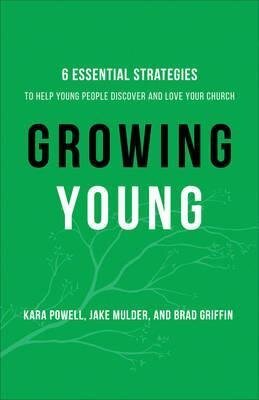
Growing Young
Author
Kara Powell, Jake Mulder and Brad Griffen
Who should read it
Growing Young is a broadly accessible book that will benefit youth ministers, youth ministry leaders and church leaders.
Why
How can a church Grow young not old? What can churches do to help young people passionately connect with God through a faith community? These are the questions Growing Young, from the Fuller Youth Institute, explores by researching churches in the USA where the average median age of the church is dropping, not increasing. Their research discovered 6 priorities that are common in churches who are growing young. Each priority is analysed and then a variety of actions are explored. It offers up-to-date information and interpretation on how churches are engaging young people well, and it’s full of suggestions from those findings. Each chapter ends with pages of “Ideas for Action” and tools to gauge the health of your church in its efforts to grow young. Whilst it does not offer a rigorous theological or Biblical defence of each priority, the book functions well as a discussion starter for those who want to engage young people in their church.
Publisher
Grand Rapids: Baker, 2016

A.S.K.: Real World Questions / Real World Answer
Author
David Robertson
Who should read it
This book is written for Christian teenagers, addressing their questions, curiosities and doubts about the Christian faith. Youth leaders will value the way Robertson frames his answers to the questions. Curious non-Christian teens will find clear, accessible answers to some of their own questions about the Christian faith of their friends.
Why
David Robertson has produced a clear, concise and readily accessible book on 52 questions that Christian teenagers have asked about their faith. Robertson sourced the questions from real-life teenagers across the globe and had provided succinct, yet substantive, answers that also bear witness to the authors pastoral heart. From the nature of God (“If God talked to Samuel, why can’t he talk to me?”), science and faith (“Why doesn’t Christianity accept the Big Bang?”), suffering (“Why did God kill my father and we suffered because we became orphans?”), theological quandaries (“Do dogs go to heaven?”) to the big cultural issues of today (“What should be a Christian’s response to mental illness?”), each chapter contains a bible reading, key verse, a two page explanation, questions to consider, recommended further readings and a prayer of response.
Publisher
Christian Focus Publications, 2019